Sky-High Fuel Costs Force Major Airlines to Slash Low-Performing Routes and Raise Fares

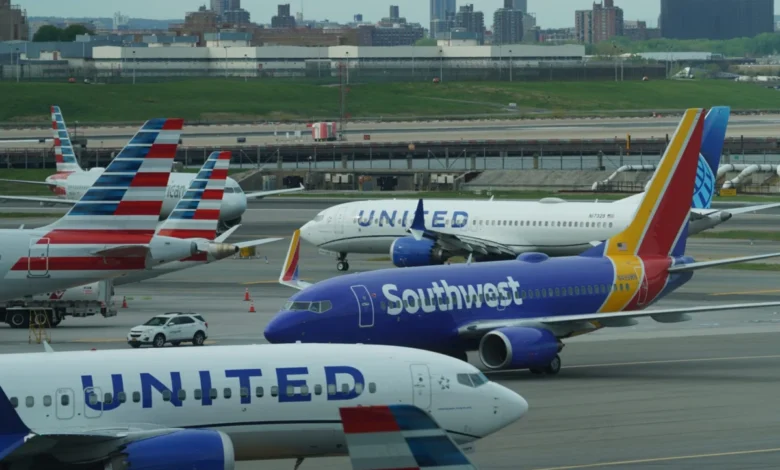
The global commercial aviation industry is facing a severe financial squeeze as jet fuel prices surge to near-record highs, forcing major U.S. and international carriers to reevaluate their networks, trim flight capacities, and scale back ambitious growth projections. Executives from leading airlines—including American Airlines, United Airlines, and Southwest Airlines—revealed this week that escalating fuel expenditures, propelled largely by geopolitical instability and disruptions in Middle Eastern oil supplies, have upended financial forecasting for the remainder of the year and well into the future.
With jet fuel trading at approximately $4.71 per gallon, prices have more than doubled over the past year, hovering near a staggering 20-year high. For ordinary travelers, this macroeconomic shock translates directly into a more restrictive travel environment characterized by dwindling bargain tickets, reduced flight frequencies, fewer nonstop options, and a higher overall cost of air travel. As carriers scramble to protect their profit margins, the fundamental economics of commercial aviation are undergoing a rapid and painful recalibration.
Financial Pressures and the Anatomy of the Fuel Crisis
The root cause of the current aviation crisis lies in volatile energy markets. Ongoing conflict in Iran and broader regional tensions have significantly choked off the global supply of crude oil. Because jet fuel is directly refined from petroleum, these geopolitical disruptions have impacted the aviation sector with disproportionate severity.
Major network carriers, which operate on tight profit margins despite billions in annual revenue, have been forced to absorb billions in unexpected operational costs. Financial disclosures from the first two quarters of the year underscore the magnitude of the problem. United Airlines reported spending approximately $8.2 billion on fuel during the first six months of the year, while American Airlines reported fuel expenditures of roughly $7.8 billion. For both legacy carriers, these figures represent a staggering 49% increase compared to the same period in the previous year. Meanwhile, Southwest Airlines reported fuel outlays nearing $3.6 billion, marking a 39% year-over-year increase.
These escalating costs quickly overwhelmed corporate budgets. During presentations at Morgan Stanley’s annual Laguna Conference, airline executives openly discussed the compounding financial burden. American Airlines Chief Financial Officer Devon May told conference attendees that the recent spike in fuel prices has inflated the company’s projected fourth-quarter expenses by an eye-watering $1 billion. This sudden fiscal pressure forced the airline to scale back its December flight schedule and rein in expansion plans for the upcoming year.
Similarly, Southwest Airlines CFO Tom Doxey noted that his company initially entered the year planning to expand its flight capacity by 2% to 3%. However, persistent high fuel prices forced the airline to cut that capacity growth projection in half.
The Bell Curve of Profitability: Trimming Marginal Routes
To navigate the crisis, airlines are relying on a foundational industry concept often described as the "bell curve of profitability." Every commercial carrier operates a vast network of routes, ranging from highly lucrative cross-country and international trunk lines to smaller regional hops that operate on razor-thin margins.
United Airlines CFO Mike Leskinen explained the rationale behind network adjustments during his conference appearance. As the baseline cost of fuel rises, the financial viability of flights located at the lower end of the profitability curve evaporates. Routes that generated modest profits or broke even in a low-fuel environment quickly become liabilities when jet fuel approaches $5 per gallon.
Consequently, United Airlines confirmed plans to reduce its flight volume for December and signaled that further reductions could materialize next year if energy markets do not stabilize. "There’s some marginal routes that don’t make sense in a higher fuel environment, so we cut them," Leskinen told analysts. "We’re flying to maximize profitability and free cash generation, so we’ll make those adjustments."
While major carriers have been tight-lipped about the exact number of flights eliminated, industry insiders note that the reductions are strategic. Southwest Airlines representatives stressed to reporters that their schedule modifications are "very minimal" and do not involve large-scale exits from specific markets or airports. Nevertheless, the collective withdrawal of capacity by multiple major airlines is reshaping the domestic and international travel landscape.
Consumer Impact: Fewer Choices and Higher Fares
For the traveling public, the downstream effects of the jet fuel crisis are immediate and painful. The most visible consequence is the steady disappearance of bargain-priced airfares. Data from the Bureau of Labor Statistics indicates that consumer airfares in August surged by 23.4% compared to the previous year, vastly outpacing the general inflation rate of 3.4% for overall consumer goods.
Beyond higher ticket prices, passengers are encountering structural inconveniences. The elimination of marginal and low-performing routes frequently results in reduced flight frequencies, less convenient departure times, and an increased reliance on connecting flights rather than direct, nonstop service. For travelers visiting family, conducting business, or planning vacations, the reduced availability of seats diminishes flexibility and increases travel times.
Airlines are also utilizing non-ticket revenue streams to mitigate fuel inflation. Across the industry, carriers have implemented widespread increases in checked baggage fees. Furthermore, industry experts note that ticket pricing operates with a natural lag. Because airlines sell a significant percentage of seats months in advance, carriers cannot retroactively adjust fares for tickets already purchased. United Airlines, for instance, noted that roughly 35% of its fourth-quarter tickets were already booked before the full impact of the recent fuel spike hit. As existing inventories clear, airlines are expected to increasingly pass on the burden of high fuel costs through elevated baseline ticket prices for future bookings.
International Spillover: The European Budget Carrier Squeeze
The jet fuel crisis is not confined to the United States; its shockwaves have reverberated across the Atlantic, severely impacting European aviation as well. Europe’s heavy reliance on Middle Eastern energy supplies left its carriers uniquely vulnerable to the oil price shocks stemming from the conflict in Iran.
Low-cost European carrier Ryanair, famous for its ultra-cheap promotional fares and expansive continental network, felt the pressure acutely. The airline announced a downward revision to its full-year passenger forecast, cutting its traffic target from 216 million to 214 million travelers. Ryanair CEO Michael O’Leary issued public warnings that sustained high oil prices threaten to permanently alter the landscape of budget travel in Europe, making sub-twenty-dollar flights increasingly unsustainable.
The synchronized defensive measures taken by carriers on both sides of the Atlantic highlight the fragile equilibrium of modern commercial aviation. As airlines prioritize cash generation and bottom-line stability over network expansion, the era of ubiquitous cheap air travel faces its most formidable challenge in decades.
Outlook and Industry Response
Looking ahead, industry analysts suggest that the trajectory of airfares and flight availability will remain tightly coupled with global energy markets. Until diplomatic solutions or increased production stabilize crude oil supplies, airlines will likely maintain a defensive posture.
For consumers, navigating this environment requires early booking strategies and increased flexibility. As carriers continue to prune their route maps in pursuit of operational efficiency, travelers must prepare for a marketplace where convenience comes at a premium and the ubiquitous airline bargain is increasingly difficult to secure.